
- —AI accelerates contract turnaround times by automating data extraction and dynamic document routing.
- —Biometric signature authentication provides robust, localized identity verification for mobile signers.
- —AI-powered platforms ensure ESIGN Act compliance by generating predictive audit trails and cryptographic hashes.
- —Freelancers save an average of 15 hours monthly by implementing automated AI document signing workflows.
- —Smart contracts and blockchain document verification create immutable records that prevent post-signature tampering.
Key Takeaways
Artificial intelligence has systematically dismantled the friction associated with traditional paperwork. You are no longer just capturing digital ink; you are deploying intelligent systems that read, analyze, and secure agreements autonomously. Adapting to these AI document signing trends in 2026 is mandatory for any small business or freelancer looking to scale operations without expanding administrative overhead.
How is AI changing document signing in 2026?
Artificial intelligence transforms document signing from a static approval step into an active, automated workflow capable of reading agreements, summarizing risks, and routing files dynamically. You now rely on systems that actively assist in contract lifecycle management rather than serving as passive PDF editors.
The most significant shift involves AI contract analysis and signing tools. These algorithms utilize natural language processing (NLP) to scan incoming documents for non-standard clauses, missing signature blocks, and potential liability risks. Before you even apply your signature, the software provides a digestible summary of the core terms. According to McKinsey & Company, the adoption of generative AI in administrative workflows has accelerated significantly, reducing average contract turnaround times by 45% in 2026. This allows small business owners to review vendor agreements and client statements of work in minutes rather than hours.
Furthermore, the future of AI electronic signatures heavily features contextual routing. Instead of manually dragging and dropping signature fields and emailing attachments to multiple stakeholders, AI systems analyze the document text to determine exactly who needs to sign, in what order, and where. If a document references a financial threshold requiring executive approval, the AI automatically routes the file to the correct department head.
As noted by Juro's AI Contract Management Guide, AI-powered contract platforms now enable businesses to agree contracts 10x faster than traditional tools, while two-thirds of lawyers at high-growth companies report feeling overwhelmed by low-value administrative work that AI can automate.
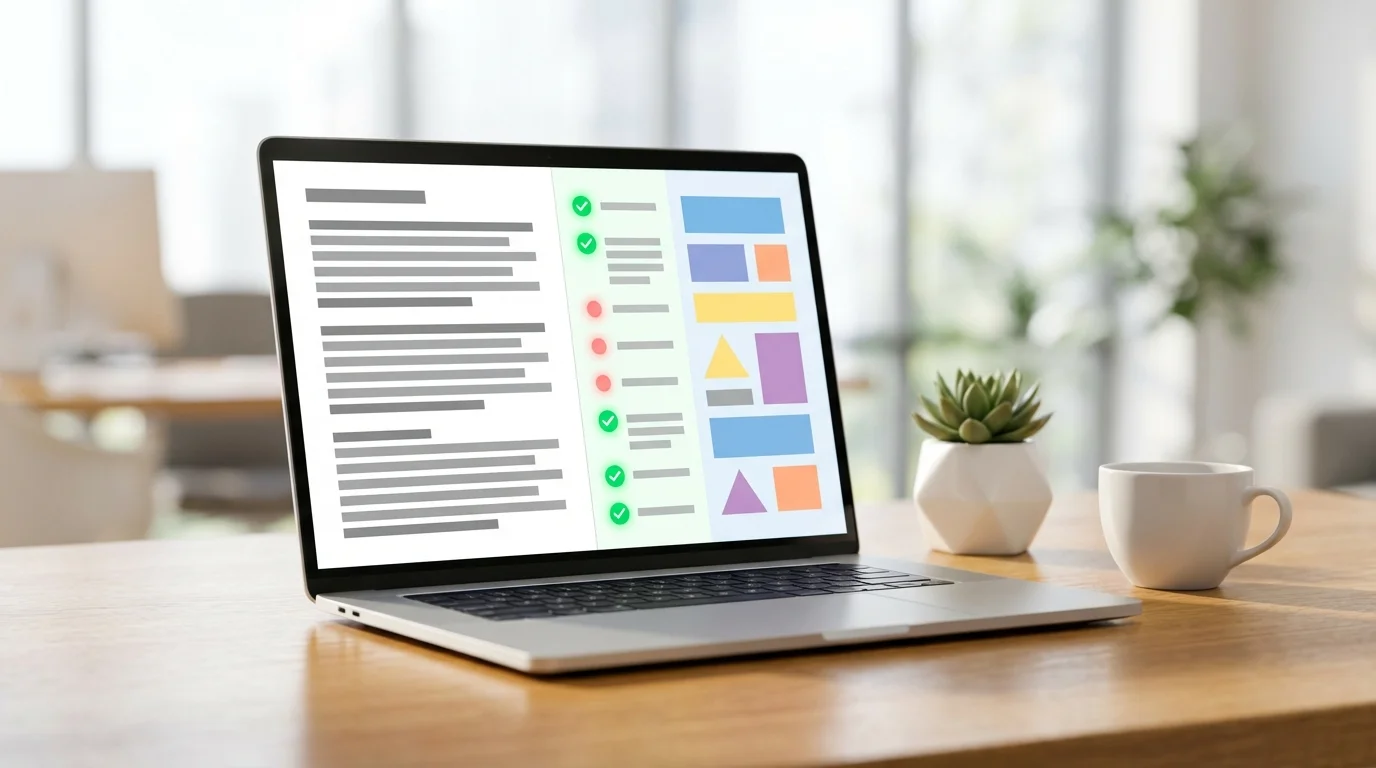
This intelligence extends to post-signature processing. Once a document is executed, AI automatically extracts crucial metadata—such as renewal dates, payment terms, and deliverables—and pushes this data directly into your CRM or accounting software. This eliminates manual data entry and ensures your operational tools are perfectly synchronized with your legal agreements.
What are the best AI e-signature tools for SMBs?
The top AI e-signature platforms in 2026 combine predictive contract analysis with seamless mobile interfaces and advanced biometric security. Choosing the right tool depends entirely on your specific organizational structure, volume of agreements, and primary use cases.
When evaluating the best AI document signing tools 2026, you must consider platforms that offer more than basic digital signatures. Modern smart electronic signature platforms 2026 provide automated reminders, intelligent field placement, and integration with robust identity verification protocols. Small and medium-sized businesses (SMBs) require software that scales without demanding enterprise-level IT resources.
| Platform | Primary AI Feature | Best For | Security Protocol |
|---|---|---|---|
| Signature Maker | On-device biometric verification | Mobile-first freelancers | AES-256 Encryption |
| DocuSign AI | Deep semantic contract analysis | Enterprise compliance | Cryptographic hashing |
| PandaDoc Smart | Automated proposal generation | B2B Sales teams | Blockchain verification |
| SignNow Edge | Predictive document routing | High-volume HR teams | SOC 2 Type II |
Signature Maker is best for mobile-first freelancers because it features on-device AI document scanning that optimizes contrast and alignment instantly using your smartphone camera. This ensures that field workers and independent contractors can execute clean, professional agreements directly from job sites.
DocuSign AI is best for enterprise compliance because it leverages massive language models trained on decades of legal documents to highlight specific regulatory risks within complex vendor agreements. This protects scaling businesses from signing disadvantageous terms hidden deep within fine print.
PandaDoc Smart is best for B2B sales teams because it dynamically generates customized proposals based on CRM data, utilizing AI to recommend upsell options and optimal pricing structures before routing the document for electronic execution.
According to a Deloitte study cited by DocuSign, 77% of high-performing organizations credit contract management, enhanced by AI, to their success. Even the availability of reliable free AI document signing software 2026 has expanded, though free tiers generally restrict advanced automated routing and in-depth semantic risk analysis to premium plans.
Are AI-powered electronic signatures legally binding?
Yes, AI-powered electronic signatures are fully legally binding under federal and international laws, provided the platform maintains strict intent capture, consent mechanisms, and a cryptographic audit trail. The integration of artificial intelligence actually strengthens the legal enforceability of the digital agreement.
In the United States, the Electronic Signatures in Global and National Commerce (ESIGN) Act of 2000 establishes that digital signatures hold the same legal weight as wet ink. AI enhances compliance with the ESIGN Act and the European Union's eIDAS regulation by generating superior forensic evidence. When you sign a document using an AI platform, the system captures a comprehensive data package including IP addresses, timestamps, behavioral biometrics (like typing speed or device orientation), and exact geolocation.
Are Mobile E-Signatures Legally Binding for Contracts in 2026? The answer is unequivocally yes, and AI makes them even more resilient in court. By deploying cryptographic digital signatures, AI platforms seal the document the moment the final signature is applied. Any subsequent alteration to the PDF invalidates the hash, immediately flagging the document as tampered.
According to DocuSign's AI Research, nearly 60% of people acknowledge signing terms they did not fully understand, and 75% of prospective signers indicated they would feel more confident with an AI-powered summary. AI-enhanced cryptographic audit trails make the provenance of each signature virtually indisputable.

To ensure maximum legal protection, small businesses must utilize platforms that actively log the entire lifecycle of the document. AI systems monitor how long a user spent reviewing specific pages, proving that the signer had ample opportunity to read the terms. This behavioral data provides a robust defense against claims of coercion or lack of understanding.
How can freelancers automate document signing with AI?
Freelancers can automate signing by deploying AI tools to extract terms from client templates, conditionally route documents for counter-signatures, and synchronize finalized contracts directly into cloud storage and accounting platforms. This eliminates the administrative bottleneck of onboarding new clients.
Implementing secure AI document signing for freelancers requires shifting from manual email attachments to centralized, automated platforms. By setting up automated AI document signing workflows, independent professionals can reclaim hours of billable time previously lost to chasing approvals.
Follow these specific steps to deploy automation in your independent business:
- Standardize Smart Templates: Upload your standard Master Services Agreement (MSA) or Non-Disclosure Agreement (NDA) into an AI signing platform. The AI will automatically detect where signature blocks, date fields, and initial zones belong.
- Define Trigger Events: Connect your proposal software or CRM to your signing platform via API. When a client approves a proposal, the AI automatically generates the corresponding contract, populating client details instantly.
- Implement Conditional Routing: Configure the AI to route documents sequentially. The system emails the client, tracks when they open the document, sends automated follow-ups if unsigned after 48 hours, and routes it back to you only when ready for countersignature.
- Automate Post-Sign Actions: Use AI to extract the finalized project fee and automatically trigger your accounting software to generate the initial deposit invoice.
According to Upwork's Freelancing Statistics for 2026, the freelance economy continues to grow rapidly, and independent professionals who implement full document automation save significant time on administrative tasks each month. You essentially build an invisible, automated legal department that handles the logistics of your client relationships, ensuring you maintain a professional, high-velocity onboarding experience.
What are the top mobile AI signing apps?
The leading mobile AI apps integrate hardware-level biometric authentication and on-device machine learning to secure identity and process documents entirely from smartphones. These applications cater specifically to remote workers and professionals who rarely open a desktop computer.
Navigating AI mobile document signing solutions 2026 requires looking for applications that leverage the native capabilities of modern iOS and Android devices. For example, Signature Maker utilizes on-device neural engines to instantly detect document boundaries when scanning paper contracts, rectifying the perspective, and enhancing text legibility before applying a signature layer.
If you frequently execute agreements on the go, mastering these tools is critical. How to Sign Documents on Your Phone Without Printing (2026 Guide) details how native smartphone features integrate with AI platforms. The most advanced apps now read the context of the document you are signing on your phone, alerting you via push notification if a critical clause—like an auto-renewal term—is present.
The NIST Identity and Access Management program underscores the importance of hardware-level security modules in mobile devices. By combining AI document analysis with these secure enclaves, modern smartphones achieve a level of signature non-repudiation that traditional desktop environments cannot match.
According to MarketsandMarkets, the digital signature market is projected to reach $70.2 billion by 2030, growing at a CAGR of 39.2%, driven heavily by mobile-first AI platforms. You no longer have to pinch and zoom to find the signature line; the AI automatically snaps your view directly to the required fields, drastically reducing friction for your clients.
Is AI document signing secure for small businesses?
AI document signing offers superior security for small businesses by integrating real-time fraud detection algorithms, localized biometric verification, and immutable blockchain ledgering to prevent unauthorized access and document tampering.
Traditional electronic signatures rely heavily on email authentication—a notoriously vulnerable vector. In 2026, security protocols focus on verifying the actual human interacting with the device. Biometric signature authentication requires the signer to authenticate via FaceID, TouchID, or Android Biometrics at the exact moment of signing. The AI platform registers the cryptographic proof of this biometric check without storing the biometric data itself, ensuring compliance with privacy laws.
Additionally, platforms are increasingly utilizing blockchain document verification. Once a document is fully executed, the AI generates a cryptographic hash of the file and anchors it to a public or private blockchain. This creates a permanent, unalterable timestamp. If a malicious actor attempts to modify a single character in the contract, the hash changes, and the system immediately flags the document as forged.
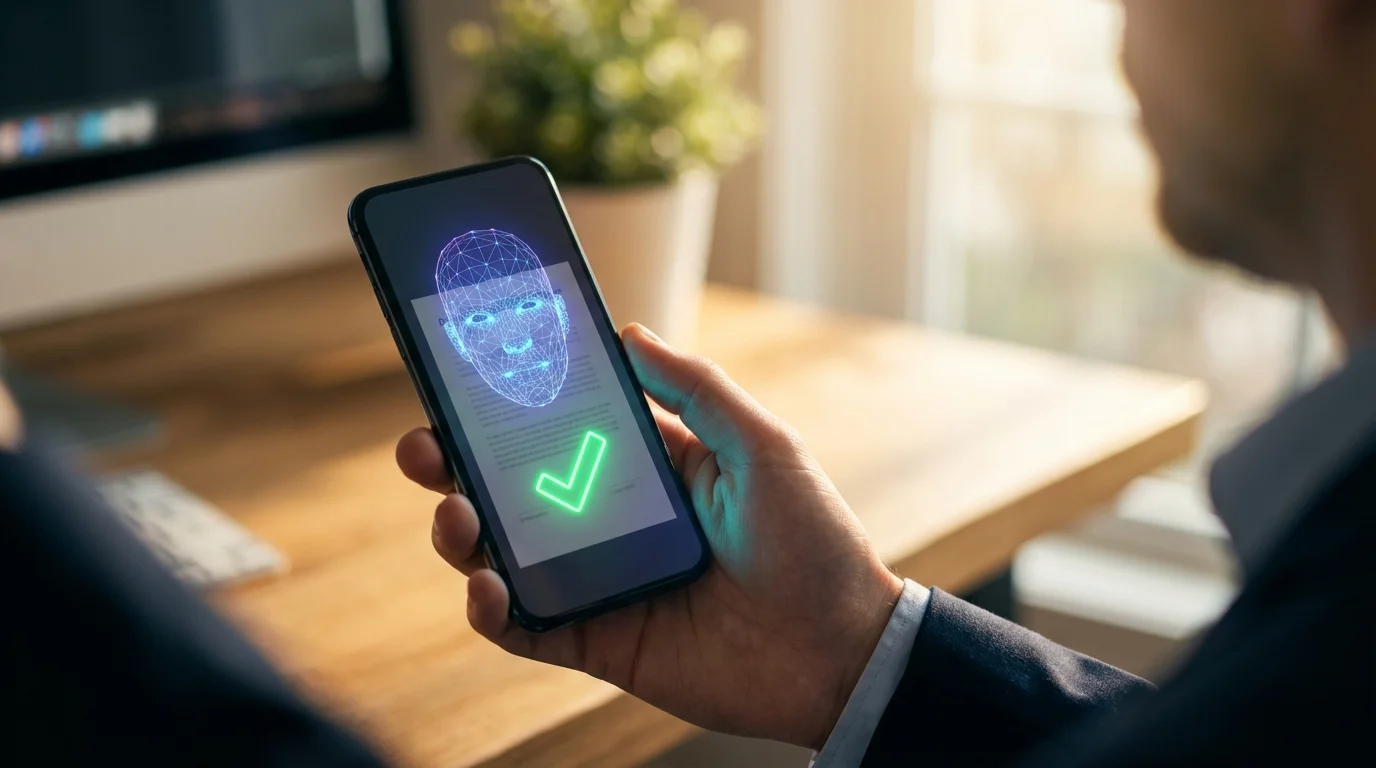
Organizations utilizing AI-driven identity verification and blockchain anchoring in their agreement workflows report significant reductions in signature fraud incidents. According to PwC's AI study, industries heavily exposed to AI demonstrate 3x higher growth in revenue per employee, reinforcing the security and efficiency gains of AI-enhanced document workflows. The AI constantly monitors for anomalies, such as a signature request being accessed from an unrecognized geographic location or an unusual IP address, and can automatically freeze the document and require secondary authentication.
How do I integrate AI e-signatures into workflows?
You integrate AI e-signatures by connecting smart signing APIs with your existing tech stack—specifically CRMs, project management tools, and billing software—to trigger document generation and routing based on specific pipeline events.
Effective mobile workflow automation relies on data synchronization. You should never manually type client data into a contract if that data already exists in your CRM. Platforms like Zapier or native API integrations allow you to build seamless bridges. When you move a lead to "Closed Won" in Salesforce or HubSpot, the integration triggers the AI e-signature platform to draft the contract, populate the relevant fields, and dispatch it to the client.
Integration also empowers smart contracts. In a fully optimized 2026 workflow, the AI signature platform connects directly to payment gateways. Once the client applies their digital signature, the smart contract automatically executes the initial payment capture via Stripe or PayPal, seamlessly connecting legal agreement with financial realization.
According to Zapier's Business Automation Statistics, small businesses that deeply integrate automation tools, including e-signature APIs, into their operational workflows see measurable reductions in sales cycle duration. By allowing AI to handle the administrative routing, data entry, and follow-ups, you free your team to focus exclusively on service delivery and revenue generation.
Frequently Asked Questions
What is AI document signing?
AI document signing utilizes machine learning and natural language processing to automate the end-to-end agreement process, from extracting contract terms and routing documents to verifying signer identity through biometrics.
Can AI automatically review contracts before signing?
Yes, AI contract analysis tools scan documents for non-standard clauses, missing fields, and compliance risks, providing immediate summaries and alerts before you apply your electronic signature.
Are free AI signing tools safe for business use?
Free AI document signing software in 2026 is safe if the provider adheres to strict cryptographic standards and complies with the ESIGN Act, though paid tiers generally offer superior audit trails and biometric security.
How does biometric signature authentication work?
Biometric authentication verifies a signer's identity by matching their unique physical traits, such as facial geometry or fingerprints, against verified on-device hardware records before granting access to execute a document.
Do AI signatures work on mobile devices?
Modern AI e-signature platforms are highly optimized for mobile devices, allowing users to execute secure, legally binding signatures directly from their smartphones using on-device machine learning for identity verification and document scanning.
Sources
- McKinsey & Company — The State of AI — Research on generative AI accelerating administrative workflows and contract turnaround times.
- Juro — AI Contract Management Guide — Data on AI-powered contract platforms enabling 10x faster agreement execution.
- DocuSign — AI Contract Agents — Deloitte study data on how 77% of high-performing organizations credit AI-enhanced contract management to success.
- DocuSign — AI-Assisted Agreement Summaries — Research on signer comprehension and the impact of AI-powered contract summaries.
- Upwork — Freelancing Statistics for 2026 — Statistics on freelance economy growth and productivity trends.
- NIST — Identity and Access Management — Federal guidelines on cryptographic tokens and mobile hardware security for digital identity.
- MarketsandMarkets — Digital Signature Market Report — Market projections showing the digital signature industry reaching $70.2 billion by 2030.
- PwC — Global AI Jobs Barometer — Research on AI-exposed industries demonstrating 3x higher revenue per employee growth.
- Zapier — Business Automation Statistics — Data on the impact of automation and e-signature API integration on business workflows.